
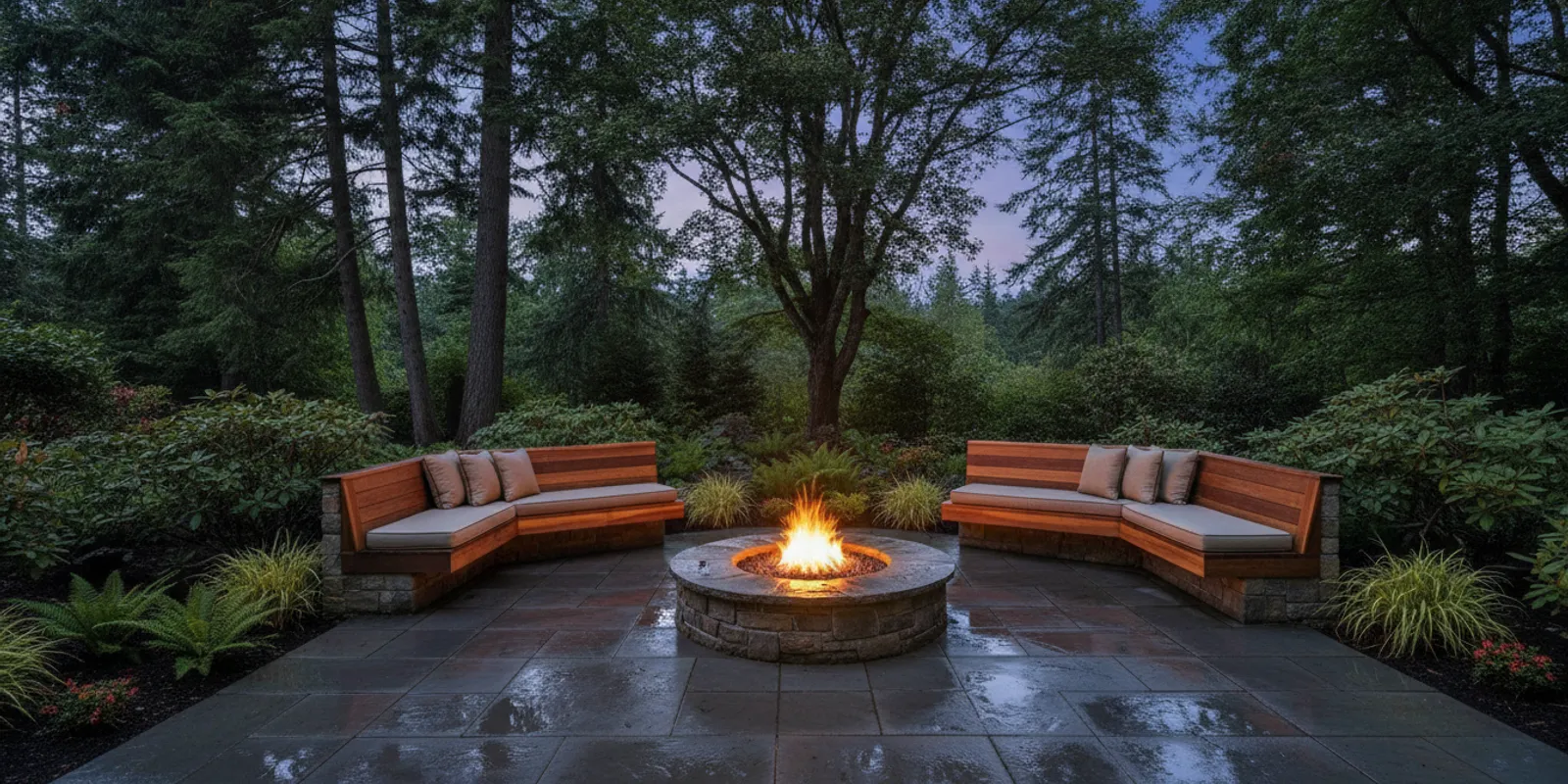
An outdoor fire feature can make a Seattle-area patio feel welcoming long after the sun goes down. The right outdoor fire pit design Seattle homeowners choose depends on more than the burner or bowl: the layout, fuel, materials, local rules, and how the space handles rain all matter. A fire pit keeps the flame open and social; an outdoor fireplace frames it and gives the seating area a stronger architectural focus. This guide explains how to weigh those options and plan a feature that belongs in your landscape.
Call to discuss your landscape project
For local context before you begin, see this guide to hardscape planning on Bainbridge Island.
Fire pit vs. fireplace: which outdoor feature is right for your Seattle yard?
Start with the way you want people to use the space. A fire pit usually invites people to sit around the flame and talk across it. An outdoor fireplace faces the seating toward one focal point. Neither is automatically better. The better choice fits the site, the circulation, and the atmosphere you want to create.
A fire pit can work well in a generous patio or courtyard where there is room to walk around the seating. It can be a freestanding bowl, a built-in circular element, or a low, geometric structure integrated with the paving. Because the flame is visible from several directions, the surrounding arrangement matters. Leave a comfortable route between the fire, seats, doors, and other parts of the yard instead of treating the fire feature as an object dropped into an open patch.
A fireplace is more directional. Its back and sides can help establish an edge to an outdoor room, and its vertical form can make a broad patio feel more composed. It can also become a visual anchor from inside the house. That stronger sense of enclosure may be useful in an exposed yard, but it requires thoughtful placement: consider the opening, the direction people will face, nearby walls and rooflines, and how smoke might move through the site.
| Planning factor | Outdoor fire pit | Outdoor fireplace |
|---|---|---|
| Social layout | Seating can gather around the flame | Seating generally faces one direction |
| Visual character | Low, open, and often sculptural | Vertical focal point with a stronger architectural presence |
| Space needs | Needs usable clearance and circulation around the feature | Needs room for the structure, front-facing seating, and safe access |
| Key design question | Can people circulate comfortably around the fire? | Where should the opening face, and how will the structure relate to the house? |
| Cost drivers | Fuel system, construction, paving, seating, and site preparation | Structure, foundation or base, finish materials, fuel system, and site preparation |
Fuel is another early decision. Wood-burning features offer the movement and sound of a real wood fire, but they also create smoke, require fuel storage, and need a plan for ash and cleanup. Gas-fired options can offer convenient starting and shutoff, but require compatible equipment and properly planned utility work. The best choice depends on the site, the rules that apply there, and how much tending you want to do.
Do not settle the choice from a showroom image alone. Sketch the patio, doors, windows, property edges, overhead structures, and likely seating. Then check the proposed feature against manufacturer instructions and local requirements. For more on selecting and coordinating hardscape elements in the area, see this local hardscape contractor planning guide.
Materials for PNW outdoor fire features: what works in a wet climate
In the Pacific Northwest, materials have to look intentional in both dry weather and the long damp stretches between sunny days. Rain, shade, leaf litter, and drainage affect how a patio is experienced. Choose a material palette as a whole: the fire feature, surrounding paving, edges, steps, and seating should relate to one another and to the house.
Natural stone can give a fire pit or fireplace a grounded, site-specific appearance. The particular stone, finish, thickness, and detailing matter; ask how the selected product is intended to be used and maintained outdoors. Concrete and masonry can create clean, simple forms, while porcelain or other paving products may suit a more tailored design when specified for the application. Cedar or other wood accents can soften stone and masonry, but should be kept at the distances and locations required by the fire-feature manufacturer and applicable rules. A material’s attractive appearance does not establish that it is safe next to heat.
For a wet site, pay close attention to the base and water path, not only the visible surface. The patio should shed or manage water without directing it toward the house, a doorway, or an inconvenient low spot. A well-considered edge can keep planting soil and surface materials in place. Where the design uses permeable paving, the underlying assembly and site conditions need to support the intended drainage; a permeable-looking surface by itself does not guarantee that water will infiltrate as planned.
Surface texture matters too. A smooth finish can be elegant, but the chosen product should suit an exposed outdoor walking area and the expected wet conditions. Ask the designer or supplier about the product’s intended use, installation details, cleaning, and any limitations. Also think about the transition from the patio to lawn or planting. Clear edges and gentle changes in level can help the fire area read as a purposeful outdoor room rather than a patch of paving.
Wood-burning fire features deserve a specific smoke conversation. Outdoor fires can emit fine particulate matter; a U.S. Forest Service research publication examines emissions from recreational fire pits. That is a reason to consider smoke movement and the experience of nearby occupants, not a guarantee that one fuel or layout is suitable for every property. See the U.S. Forest Service research on outdoor recreational fire pit emissions, and weigh fuel choice and siting with the site’s actual conditions.
Before construction, confirm what the selected fire feature requires. The manufacturer’s installation manual should govern clearances, base construction, ventilation, fuel connections, and operation for that specific unit. Ask the relevant local building or fire authority which permits, restrictions, or seasonal rules apply to your address. Requirements can vary by jurisdiction and by the type of appliance; do not assume a detail used on another property applies to yours.
Design ideas: fire pits with oyster shell surrounds and permeable paving
A fire feature can anchor a landscape without dominating it. One approach is a quiet palette: a simple stone or masonry fire element, larger-format paving, and planting that frames the patio while preserving clear views and circulation. Another is a more textural composition, pairing a crisp fire bowl with natural stone and a small area of contrasting aggregate. The key is to use contrast deliberately, not to combine materials just because each one looks appealing on its own.
Crushed oyster shell can add a pale coastal note to a landscape, and ShellScapes supplies it for outdoor applications. In a fire-feature design, it may be considered as a distinct surrounding surface or accent where the product and assembly are appropriate. It is not a substitute for a specified noncombustible hearth, burner bed, or safety clearance. Keep the fire unit’s installation instructions and local requirements in control of the hot zone, and use the shell only where the designer has confirmed it fits the intended application.
Oyster shell can also be visually effective when it forms a defined band beside another paving material rather than filling the entire patio. The boundary can be set with an edge detail, a change in paving direction, or a deliberate shift in level. That makes the material choice legible and helps prevent loose aggregate from migrating into planting or the fire area. For background on its characteristics and installation considerations, read the guide to crushed oyster shell uses and coverage.
Permeable paving can be another part of a rain-aware concept, but it needs to be chosen and built for the site. Designers should account for the soil, slope, subbase, adjacent structures, and where overflow will go during heavy rain. A fire area also needs stable, suitable footing and clean transitions. A carefully placed solid-paving zone around the fire with permeable paving elsewhere may make more sense than trying to make every surface do the same job.
Think in layers when shaping the atmosphere:
- Focal point: Decide whether the flame itself, a fireplace wall, a view, or a garden feature should lead the composition.
- Seating: Choose movable chairs, built-in benches, or a combination, and leave clear paths rather than filling every edge.
- Ground plane: Coordinate paving, shell accents, steps, and borders so that the fire area feels connected to the rest of the yard.
- Planting: Use planting to soften the edges and create a sense of enclosure, while respecting required clearances and maintaining access.
- Lighting: Plan low-level path and task lighting separately from the flame so people can move safely when the fire is not lit.
Material inspiration is only the first step. Site grading, the fire unit’s requirements, and circulation should decide where each finish belongs. For homeowners considering a wider landscape transformation, this overview of the Seattle landscape design process explains how goals and build planning can come together.
What does an outdoor fire pit cost in Seattle?
There is no useful one-size-fits-all figure for a custom outdoor fire feature. The final scope can range from installing a selected unit in a prepared area to building a complete outdoor room with new paving, seating, steps, lighting, and landscape work. A fireplace and a fire pit also involve different forms of construction, so comparing them by the feature alone can leave important work out of the picture.
Ask for an estimate that shows what is included and identifies assumptions. Cost is commonly shaped by:
- Feature type and fuel: A built structure, selected fire unit, and fuel system each have different requirements. Gas service or other utility work can add scope; a wood-burning feature has its own design and use considerations.
- Site preparation: Access, excavation, grading, existing paving, and the condition of the proposed base all affect the work required.
- Materials and detailing: Stone selection, masonry, paving format, custom edges, and built-in seating change both the material quantity and installation detail.
- Drainage and transitions: Managing water, connecting levels, and tying new work into an existing patio or landscape can require additional coordination.
- Related improvements: Lighting, planting, retaining work, steps, and paths may be part of a cohesive project even though they are not part of the burner itself.
- Permitting and professional coordination: Applicable approvals, utility requirements, and inspections should be identified for the specific location and design.
To compare proposals, give each contractor the same basic brief: the intended use, preferred fuel, approximate location, existing site conditions, desired materials, and whether the scope includes only the fire feature or a wider patio redesign. Request a clear description of preparation, materials, utility work, drainage, and what is excluded. If a proposal has not yet confirmed rules or site conditions, treat those items as open questions rather than assuming they are covered.
It can help to separate the design decision from the construction details. First agree on the location, scale, circulation, and overall look. Then confirm the selected equipment, finish materials, technical requirements, and site work before committing to the build scope. This makes it easier to compare like with like and adjust the plan thoughtfully if a material or utility constraint emerges. Custom designs vary with the property and project scope, so an on-site assessment is a more useful starting point than a generic price range.
How ShellScapes designs custom fire features for PNW homeowners
A good fire-feature plan begins with the yard, not with a catalog photo. The designer needs to understand where people enter the space, what they see from the home, how the patio connects to the rest of the landscape, and what the site can support. On Bainbridge Island and across the Seattle area, the plan should also respond to the particular property and its applicable local requirements rather than assume every yard has the same conditions.
ShellScapes provides landscape design and hardscape construction, including custom outdoor features. The design fee is included in the construction quote when ShellScapes handles installation. A coordinated design-build process can connect the initial layout with the materials and construction decisions that follow. That is especially useful when the fire feature is one part of a larger project involving paving, retaining elements, paths, or an outdoor living area.
In an initial conversation, clarify what you want the space to do: host a few people, gather a larger group, serve as a quiet evening retreat, or create a focal point visible from indoors. Share photos, approximate dimensions, known drainage concerns, and any existing plans or material preferences. Also discuss fuel preference early, because it affects both siting and the technical coordination needed later.
From there, the plan can resolve scale, seating, circulation, paving, and planting as one composition. Before construction, confirm the equipment instructions, utility needs, local approvals, and the practical maintenance expectations for selected finishes. If you are comparing a fire pit with a fireplace, ask to review each option in the context of the same site plan. The comparison is more meaningful when both options address the same circulation, material, and project-scope questions.
For ideas on how an outdoor feature can fit a broader landscape plan, see the guide to Pacific Northwest landscape design. If shell is part of your materials palette, the article on crushed oyster shell in garden beds offers a separate look at another landscape application. Keep the scope clear: a fire feature, a shell surface, and a planting area each have distinct design and installation needs.
Call to discuss your outdoor fire feature
Frequently Asked Questions
Is a fire pit or fireplace better for a small Seattle yard?
It depends on the available clearances and the layout. A compact fire pit may suit a small patio if there is still room for safe seating and circulation. A fireplace can create a clear focal point, but its structure and front-facing arrangement need space. Have the proposed dimensions and location checked against the equipment instructions and local requirements.
Can crushed oyster shell be used directly around a fire pit?
It may be considered as a surrounding landscape material where the design and product are suitable, but it should not be assumed to serve as the fire feature’s hearth or burner base. Keep combustible materials and loose finishes outside required clearances, and follow the specific unit’s instructions and local rules.
Should I choose wood or gas?
Consider the atmosphere and tending you want, the site’s utility access, smoke movement, and any local restrictions. Wood produces smoke and requires fuel and ash handling. Gas requires compatible equipment and correctly planned connections. Confirm the rules for your address before selecting a system.
What should I ask before approving a design?
Ask what the scope includes, how water will be managed, which materials are specified, what clearances and equipment instructions apply, and who will confirm permits or utility requirements. Also confirm how the feature connects to the patio, paths, seating, and the rest of the landscape.
A thoughtfully designed fire feature should feel like a natural part of the yard, not an isolated appliance. Compare the options against your site, verify the safety and local requirements, and plan the surrounding landscape as carefully as the flame itself.