
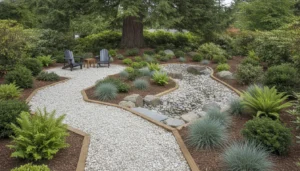
 Good Pacific Northwest landscape design does not try to make a yard behave like a different climate. It starts with the conditions already on site: wet winters, summer-dry periods, shade from trees and buildings, changing soil, and the way your household wants to move through and use the space. When those realities guide the plan, a yard can feel natural, support healthy plants, manage rain, and remain inviting through the seasons.
Ready to plan a yard around your site and lifestyle? Talk with ShellScapes about a custom landscape design consultation.
Pacific Northwest Landscape Design Starts with a Site Reading
“Pacific Northwest” covers a large region, so no single plant list or style works everywhere. A waterfront property, an inland Puget Sound lot, and a site east of the Cascades can have very different exposure, soil, wind, and winter moisture. Even two yards on the same street may differ because of a mature tree canopy, a south-facing wall, a compacted driveway, or a low point where water collects.
The most useful starting point is a seasonal site reading. Look at the yard in the rainy season and again during the driest part of summer. Note where water flows, where puddles remain, which areas dry first, and which views or paths you use most. This information is more valuable than choosing plants from a generic “Pacific Northwest garden” list.
- Winter: Identify saturated soil, roof runoff, moss-prone areas, erosion, and places where foot traffic compacts the ground.
- Spring: Watch where the soil warms and dries first, and where emerging plants receive morning or afternoon light.
- Summer: Map the areas that stay dry, including beds beneath eaves and the reflected heat near paving or walls.
- Year-round: Mark views, privacy needs, utilities, mature trees, and the routes connecting the home to the garden.
This seasonal map becomes the design brief. It helps you place plants where they can thrive, hardscape where it will perform, and water-management features where they solve a real problem rather than add decoration.
Pacific Northwest Landscape Design Starts with Water Movement
Rain is an asset, but uncontrolled runoff can erode soil, overwhelm planting beds, and carry pollutants from roofs, driveways, and patios. A climate-ready yard slows water down, spreads it where appropriate, and allows it to soak in without directing it toward a foundation or creating a permanently saturated bed.
Walk the property during or soon after a substantial rain. Trace each downspout, look for concentrated flow across paths, and check whether a slope sends water toward a neighbor or low point. Also note impermeable surfaces such as concrete, compacted gravel, and roofs. Their edges often reveal the best opportunities for a planted swale, rain garden, permeable path, or other low-impact detail.
A rain garden, as described by the U.S. Environmental Protection Agency, is a depressed landscape area that collects runoff and allows it to soak into the ground. In Western Washington, Washington State University Extension also describes rain gardens as a way to filter stormwater before it reaches local waterways. In a residential design, that can become a planted focal point rather than an afterthought.
Good drainage planning still requires site judgment. Soil infiltration, groundwater, utilities, slopes, retaining conditions, and foundation clearances all matter. A rain garden is not a universal fix for a failed drain or a chronically saturated site. If water stands for long periods, have the area assessed before selecting plants or excavating.
Choose plants for the exact microclimate
Native and climate-adapted plants can make a resilient landscape easier to maintain, but “native” is not a shortcut for “right for every location.” A woodland plant may prefer cool shade and consistent moisture, while a plant from a summer-dry meadow may need sun and fast drainage. The best palette matches each plant’s natural preferences to the conditions in its bed.
Useful questions include:
- Is the bed in full sun, filtered light, or deep shade during the growing season?
- Does soil drain quickly, stay moist, or remain wet after storms?
- Will roots compete with large trees?
- Does the planting need to tolerate reflected heat, salt exposure, deer browsing, or foot traffic?
- What should the space look like in January, not only at peak bloom?
For a starting point, OSU Extension’s water-wise Pacific Northwest plant guide explains that many regional natives tolerate summer-dry conditions, while others are adapted to wetter habitats. It also recommends grouping plants with similar sun, shade, and drainage needs. That practice, sometimes called hydrozoning, keeps irrigation and maintenance more precise.
Depending on the site, a designer might evaluate evergreen huckleberry, Oregon grape, sword fern, red flowering currant, oceanspray, salal, western red cedar, or camas. Those are not a universal recipe. They are examples to consider alongside exposure, soil, mature size, seasonal interest, and the client’s desired character. A climate-ready planting plan should identify why each plant belongs in its location and what will replace it if the site data rules it out.
Plan for establishment, then for the mature garden
New plants still need care while roots establish. OSU Extension notes that developing a healthy root system can take two to three years, with supplemental water reduced gradually as plants become established. That makes the irrigation plan, access for maintenance, and spacing decisions part of the original landscape design, not a post-installation detail.
Give plants enough room to reach their mature size. Overcrowding may look full on installation day, but it can reduce airflow, increase pruning, and force plants with different water needs into the same irrigation zone. Layering is more durable: combine canopy or small trees, shrubs, evergreen structure, perennials, grasses, and groundcovers so the yard has texture even when some plants are dormant.
Also decide how much natural change you want to see. Some summer-dry plants slow down or go dormant during the dry season. That is not necessarily failure. It can be part of a regional planting rhythm, especially when evergreen foliage, bark, stone, timber, or shell aggregate provide structure around seasonal plants.
Make hardscape work with the climate
Hardscape should direct movement and support outdoor use without creating avoidable maintenance or drainage problems. Begin with the activities that matter most: a route from the kitchen to an outdoor dining area, a level place for chairs, a fire-pit gathering area, a safe play zone, or a quiet path through planting. Then shape the grading and materials around those uses.
Permeable or porous surfaces can help reduce the amount of runoff generated by a project, but material selection is only one part of the system. Base preparation, slope, compaction, edge restraint, and transitions to existing paving determine whether a path remains stable and comfortable. The surface should also suit the way it will be used. A wheeled route, an accessible approach, and a garden footpath may need different textures and widths.
Recycled crushed oyster shell can be a distinctive option for paths, patios, courtyards, driveways, and other outdoor areas. ShellScapes sources recycled shell through partnerships with local oyster growers and describes the material as a porous, compactable surface when properly installed. Explore the oyster shell landscaping applications to see where the material may fit. A project-specific assessment is still important because traffic loads, slope, subgrade, and edge conditions affect the appropriate assembly.
Use retaining walls, steps, and drainage structures only where they solve a clear site or circulation need. On sloped properties, the most attractive solution may be a sequence of smaller terraces, planting bands, and steps rather than one oversized wall. The goal is to make grade changes feel intentional while keeping water moving safely.
Design the yard around how you live outdoors
A climate-ready yard should also be use-ready. A beautiful planting plan will underperform if the path is indirect, the seating area sits in an uncomfortable exposure, or the outdoor kitchen is disconnected from the home. List the moments you want the landscape to support:
- Morning coffee in a protected, sunny spot
- Outdoor meals with a direct route from the kitchen
- Evening gatherings near a fire pit or covered area
- Quiet views through layered planting
- Safe circulation for children, guests, pets, or mobility devices
- Low-maintenance areas that can be enjoyed without constant watering and pruning
Then test those uses against the seasons. A patio that is comfortable in July may be exposed to winter wind. A fire pit may need separation from dense planting. A sunny winter seating area may be shaded in summer by deciduous trees. These tradeoffs are not problems to hide. They are design decisions to resolve before construction.
Want to compare options before building? ShellScapes’ landscape design packages use photorealistic views, lighting design, and a walkthrough to help homeowners evaluate the yard before installation. A clear plan can make it easier to sequence work, coordinate a contractor, and choose materials with confidence.
Use a design process that tests the plan
The strongest regional landscape designs are iterative. They test circulation, drainage, planting relationships, views, lighting, and budget priorities before the crew arrives. A practical process often includes:
- Site and goals review: Record dimensions, grades, sun, drainage, existing trees, access, utilities, and the outdoor experiences the client wants.
- Concept planning: Arrange zones for arrival, movement, entertaining, planting, privacy, and water management.
- Material and plant testing: Match surfaces and species to the site’s microclimates, maintenance expectations, and environmental goals.
- Visualization: Review day and night views, key sightlines, and mature planting relationships. Adjust the design while changes are still efficient.
- Build documentation: Clarify dimensions, grades, planting quantities, materials, lighting, and sequencing for construction.
- Establishment plan: Set expectations for watering, access, pruning, seasonal change, and the first years of growth.
This approach is especially valuable when a property combines drainage constraints with premium outdoor-living features. It keeps the garden from becoming a collection of disconnected fixes and helps every element support the whole site.
How to begin your climate-ready yard plan
Before meeting with a designer, gather a few useful observations. Photograph the yard after rain and during summer. Mark the location of downspouts, hose bibs, utilities if known, existing trees, and the rooms that look onto the landscape. Write down the activities you want to support and the maintenance you are willing to take on. If you have plant failures, note where they were planted and when they struggled.
Bring those observations to a design consultation. For homeowners in the Seattle-Tacoma region, ShellScapes combines regional landscape design and installation with hardscaping and outdoor construction. Its design services can also be developed for clients outside the local construction area, with plant selections adapted to the site’s climate. Learn about ShellScapes’ landscape design and installation services, then request a consultation to discuss your property.
Questions homeowners ask about Pacific Northwest landscape design
Should every Pacific Northwest yard use native plants?
No. Native plants can support regional habitat and may be well adapted to local conditions, but the right selection depends on the site’s sun, soil, drainage, mature scale, and intended use. A thoughtful plan may combine native, climate-adapted, and ornamental plants where each performs well and supports the design.
How can a yard handle wet winters and dry summers?
Start by mapping water movement and separating plants into compatible moisture zones. Use grading, soil improvement, rain-friendly features, and appropriate surfaces to manage winter runoff. Choose summer-dry plants for sunny, well-drained areas and plan for establishment irrigation rather than assuming new plants need no water.
Is a rain garden right for a residential property?
It may be, if the site has appropriate soil, drainage, slope, and separation from structures and utilities. A professional assessment can determine whether a rain garden, swale, amended planting bed, underdrain, or another solution better fits the property.
What should a landscape design include before construction?
At minimum, the plan should clarify layout, circulation, grades, materials, planting locations, lighting, drainage intent, and construction priorities. For complex projects, visualizations and construction-ready documentation can help the homeowner and contractor understand the finished result before work begins.
Build a yard that works with the Pacific Northwest, not against it. Contact ShellScapes to start a climate-aware landscape design conversation.