
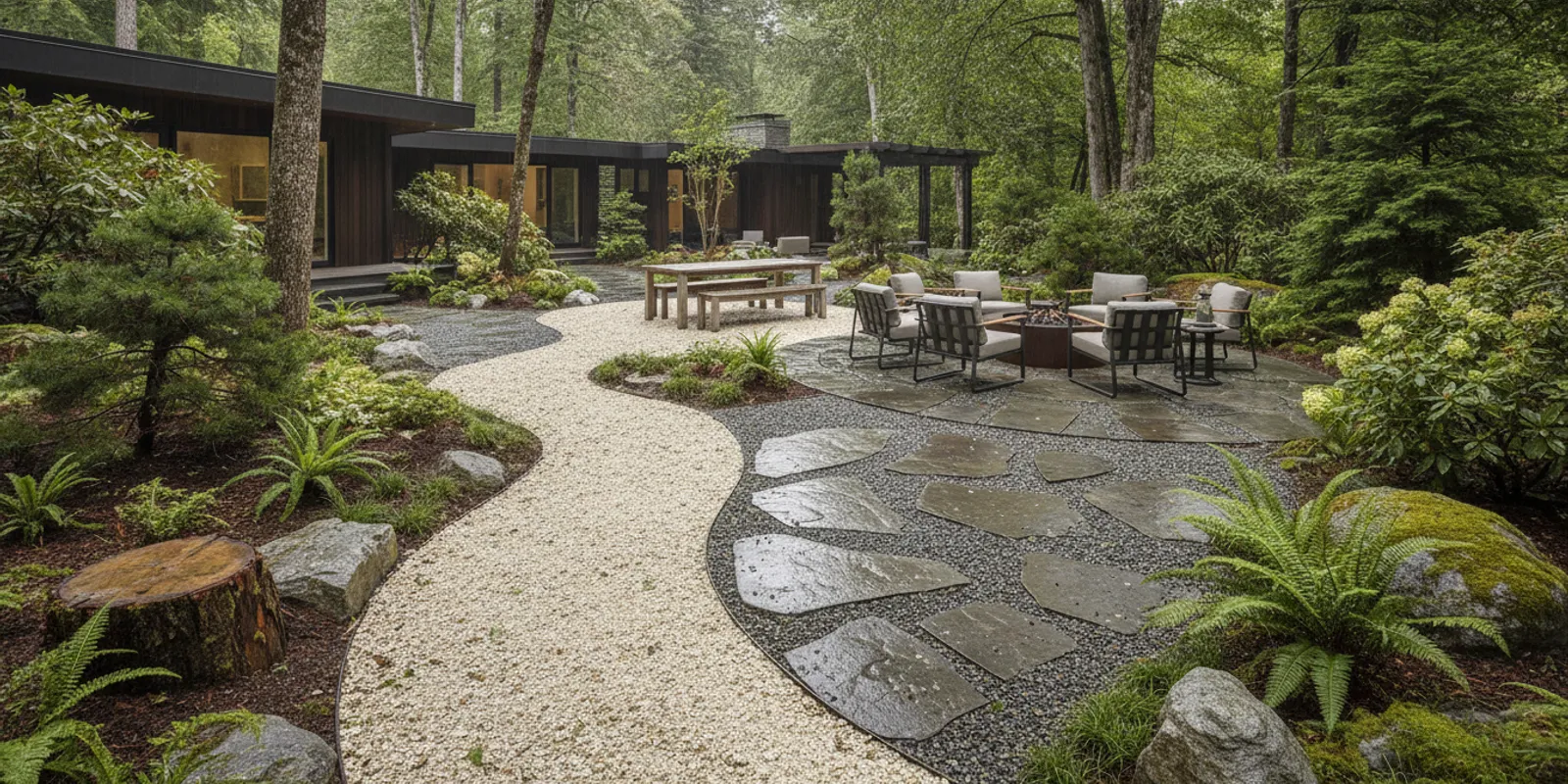
Crushed oyster shell vs. gravel comes down to the look you want, the material’s grading, and how the base is prepared: shell offers a light coastal finish and reuses a byproduct, while gravel is a broad category of aggregates with many colors, sizes, and performance characteristics. Neither material guarantees better drainage or weed control in every landscape; site conditions and installation matter.
Talk with ShellScapes about your material choice
Choosing an aggregate is not just a color decision. The right surface needs to suit how people will use it, move water appropriately for the site, and fit the character of the surrounding landscape. Below, we compare crushed oyster shell with pea gravel and crushed stone, explain how to think about environmental impact and cost, and offer a short checklist for deciding what to use.
How do crushed oyster shell and gravel differ structurally?
Crushed oyster shell is made from cleaned, broken shells. Its pieces are irregular, and shell flour—the fine particles created during crushing—can help the material bind and compact. ShellScapes notes that a properly installed shell surface can compact and recalcify into a hard, sturdy surface. The finished color is typically sun-bleached white, which creates a distinctive coastal appearance.
“Gravel” is a general term, not one single material. It can mean rounded pea gravel, angular crushed rock, or a blend with a range of particle sizes and fines. Those differences affect how the surface feels underfoot, how it settles, and how well the pieces lock together. A rounded decorative gravel behaves differently from angular, graded crushed stone, so ask what product a quote refers to rather than comparing only the word “gravel.”
- Crushed oyster shell: a pale, shell-based aggregate with irregular fragments and fines that can help it compact.
- Pea gravel: small, rounded stones that tend to shift underfoot and do not interlock like angular aggregate.
- Crushed stone: fractured, angular rock; a well-graded mix of sizes can lock together when installed and compacted appropriately.
Both shell and gravel depend on the layer beneath them. A stable, appropriately prepared base helps reduce movement and rutting; edge restraint can help keep loose material in place. For a project with several connected surfaces, it can help to plan aggregate as part of the full hardscape rather than select it in isolation. See this Bainbridge Island hardscaping planning guide for related site-planning considerations.
When comparing samples, look beyond a handful of material in a bucket. Ask to see the product at its intended installed depth, then consider how its color and texture meet nearby paving, planting, and architecture. A fine, pale surface can read differently across a large area than it does in a small sample. Also ask whether the quoted product is screened or blended to a defined grading. That specification gives you a more useful basis for comparing two suppliers than a generic label.
How does drainage compare: oyster shell vs. pea gravel vs. crushed stone?
Drainage performance depends on particle size, the amount of fine material, the depth and condition of the base, and what water does after it passes through the surface. A loose, open aggregate layer may allow water to move through it, but that does not automatically solve runoff, pooling, or soil saturation. The subgrade and the route water takes away from the area remain important.
| Material | Typical surface behavior | Drainage considerations | Good fit to consider |
|---|---|---|---|
| Crushed oyster shell | Irregular fragments; can compact, with a light shell finish | ShellScapes describes shell as providing excellent drainage. Fines, compaction, base preparation, and slope still affect the installed result. | Paths, driveways, patios, and other areas where its coastal appearance is desired |
| Pea gravel | Rounded, loose particles that can shift | Water may pass between stones, but the underlying soil and outlet determine whether the area drains as intended. | Decorative areas where a loose, rounded surface suits the use |
| Crushed stone | Angular particles; behavior varies by size blend and fines | Open-graded stone and a compactable, well-graded mix are not interchangeable; confirm the specified gradation and design. | Base layers or finished surfaces where the selected grade meets the project needs |
On a sloped site, drainage planning is especially important. Water should not simply be sent toward a building, neighboring property, or an area that cannot accept it. Consider where downspouts discharge, whether the soil is already saturated, and whether the design needs a defined path or collection point. For a broader regional perspective, read about Pacific Northwest landscape design for climate-ready yards.
Crushed oyster shell is described by ShellScapes as a well-draining material, but a product’s general characteristics are not a site-specific drainage plan. If water management is the main reason for replacing a surface, start by identifying the source and route of the water. Material selection follows that diagnosis, not the other way around.
A simple site check can help you ask better questions before ordering. Observe the area during or shortly after rain: note where water enters, where it collects, and how it leaves. Look for low spots, soil that stays saturated, and runoff coming from roofs or uphill paving. Then describe these observations to the landscape professional or supplier. A permeable-looking top layer cannot correct a poorly graded area or a base that holds water, and adding more aggregate is not a substitute for addressing the path water takes.
Use also affects what counts as a successful surface. A path used every day may need a firmer, more stable finish than a lightly used decorative strip. A driveway must be considered as a complete assembly, including its base and the loads it will carry. For either use, ask the installer what construction details make the specified product appropriate instead of assuming that all loose aggregates perform alike.
Which material suppresses weeds better?
No loose aggregate is a dependable weed barrier by itself. Weeds can establish when seeds land in accumulated organic debris on top of a surface, or when plants grow up through gaps from below. A membrane, if used, does not remove the need to prepare the site or manage debris, and it should be chosen with water movement and future maintenance in mind.
Crushed oyster shell’s fine particles can compact, and ShellScapes describes the material as weed resistant. That is a useful characteristic, not a promise that weeds will never appear. Pea gravel can leave a loose surface where debris settles between stones. Crushed stone with a compacted, well-graded profile may form a firmer surface, but performance depends on the installation and the surrounding conditions.
To reduce weed pressure with any of these materials:
- Remove existing weeds and unwanted roots before installation.
- Prepare and grade the base for the intended use; do not use extra aggregate to conceal an unresolved site issue.
- Choose a depth and particle size appropriate to the surface and follow the supplier’s installation guidance.
- Use clear edging where needed to limit material migration and make maintenance easier.
- Remove leaves and other organic debris before it breaks down into a growing medium.
Think of “weed suppression” as reducing favorable conditions, not eliminating all future weeding. The type of surface, nearby planting, and how much organic matter collects there all influence what appears over time.
For example, a path beside deciduous trees may collect leaves every fall, while an exposed courtyard may collect less organic matter but receive windblown seeds. Those settings create different maintenance demands even if the aggregate is identical. Sweep or remove debris before it settles into the surface, and inspect edges where soil, mulch, and aggregate meet. If plants are meant to grow alongside the path, define the boundary clearly so that desirable planting does not gradually spread into the walking surface.
Ask how the chosen material is expected to behave after installation and what routine care it needs. Replenishment, redistribution, or occasional spot weeding can be part of caring for a loose aggregate surface. These are practical considerations to include in the comparison, rather than assuming that a particular material removes all maintenance.
What is the environmental impact of recycled shell vs. quarried aggregate?
Crushed oyster shell can give a recovered shell material another use in landscaping. ShellScapes sources shell through partnerships with regional oyster growers and describes its product as recycled. A study on bivalve-shell valorisation discusses circular uses for shell material and reports effects on soil pH and soil nutrient measures in the context of crushed oyster shell meal; it is useful background on possible reuse, but it does not establish the environmental footprint of every shell product or landscape installation (study on circular processes for bivalve shells).
Crushed stone and other gravel products are typically sourced from rock extraction and processing. That general distinction alone is not enough to calculate which choice has the lower total impact for a particular project. Transport distance, processing, local supply, product lifespan, replacement needs, and the work required to install or remove the material can change the comparison. Ask where each material comes from and how it will be delivered.
Environmental fit is also about the project’s function. A material that suits the site and lasts in the intended application may avoid premature replacement. If you are considering oyster shell specifically, this overview of shell uses, coverage, and installation explains relevant product details. For garden applications, see the separate guide to crushed oyster shells for garden beds.
To make a fair sourcing comparison, ask each supplier the same questions: where the material comes from, whether it is a byproduct or extracted aggregate, what processing it receives, and how far it will travel to your site. Then consider the installed design, not just the raw material. An aggregate that does not suit the use may need to be moved or replaced sooner, which changes the practical picture. Avoid broad environmental claims based on a material name alone; source, transport, installation, and longevity all matter.
How should you compare cost per cubic yard?
There is no reliable universal price comparison between oyster shell and gravel without current supplier quotes, delivery details, and the project specifications. Ask for the same unit and scope from each supplier. A per-cubic-yard material price may not include delivery, preparation, edging, labor, or any base layer the project requires.
For a planning estimate, ShellScapes states that one cubic yard of crushed oyster shell covers about 100 square feet at a depth of 2 to 3 inches and weighs approximately 1,500 pounds. This is an approximate coverage guide, not a substitute for confirming the required depth and quantity for your site. Coverage for gravel varies with the product’s size, grading, and specified depth; ask the supplier how its estimate was calculated.
| What to compare | Questions to ask for shell and gravel |
|---|---|
| Material price | Is the quote per cubic yard, per ton, or another unit? What exact product and grading are included? |
| Quantity | What area and installed depth does the estimate cover? How was expected settlement or compaction considered? |
| Delivery | Is delivery included? Is there a minimum order, distance charge, or access requirement? |
| Installation scope | Does the price include excavation, base preparation, edging, placement, and compaction where appropriate? |
| Ongoing needs | How might the surface move, collect debris, or need replenishment in this location? |
Compare the total installed scope, not just the material line. A lower price per unit can be misleading if one option needs a different base, more material, or additional work to perform as intended. For a shell-specific example, consult the oyster shell driveway cost and installation guide; actual project requirements and quotes vary.
Here is how to use the shell coverage figure as a planning check. For a level area of 300 square feet, the stated guide works out to about three cubic yards at a 2-to-3-inch depth. At approximately 1,500 pounds per yard, that is about 4,500 pounds of material. These are arithmetic estimates from the stated coverage and weight, not a site-specific order recommendation. If the ground is uneven, the design calls for a different depth, or the area has curves and transitions, the actual quantity may differ. Confirm dimensions and depth with the supplier before placing an order.
For gravel, do not assume the same coverage per cubic yard without checking the particular product and depth. A quote by the ton also cannot be compared directly with a quote by the cubic yard unless you know the product’s relevant weight and the supplier’s conversion assumptions. Request a written estimate that names the material and unit, delivery, quantity, and any preparation or installation work. This makes it easier to spot whether one quote leaves important work out.
Which material is right for your project?
Choose based on how the surface will be used, how it should look, what the site requires, and what a complete installed quote includes. This quick framework can help narrow the options before speaking with a supplier or designer:
- Consider crushed oyster shell when you want its pale coastal look, value a recycled shell material, and the proposed installation suits your intended surface.
- Consider pea gravel when a rounded, loose decorative finish makes sense for the use and you are comfortable with its movement underfoot.
- Consider crushed stone when a specified angular grade or blend meets the structural and finish requirements of the project.
- Pause before choosing any aggregate if the site has persistent pooling, runoff concerns, unstable soil, or an unclear base design. Address the underlying condition first.
Ask each supplier or contractor to identify the exact material, gradation, depth, base preparation, edge treatment, and drainage assumptions. Then compare samples or completed installations in person if appearance is central to the decision. The design should coordinate the aggregate with planting, paving, walls, and transitions, rather than treating it as a standalone product. ShellScapes’ guide to the Seattle landscape design process covers how site goals and build plans fit together.
It can help to work through a short decision sequence. First, name the use: a garden accent, a frequently used path, a patio, or a driveway each puts different demands on the surface. Second, identify the desired feel and appearance, including how the aggregate meets adjacent materials. Third, confirm that the base and water-management approach suit the site. Fourth, compare the same scope and product details in each quote. If any part of the plan is unclear, resolve it before choosing by price or ordering material.
For example, a homeowner who wants a bright coastal-style walkway may prefer shell’s color and accept that leaves will need to be cleared from it. Someone seeking a loose, rounded accent around a planting area might prefer pea gravel’s softer appearance and account for its movement. A project requiring a firm, compacted surface may call for a particular angular aggregate specification. These are starting points, not universal prescriptions: the intended construction, local conditions, and supplier guidance should determine the final selection.
For a larger outdoor transformation, an aggregate surface may be only one component among stone, planting, steps, and gathering areas. A coordinated plan can clarify where a permeable surface makes sense and where a different finish or drainage detail is needed. If you are planning remotely, see the online landscape design service for sustainable yards.
Call to discuss your landscape project
Frequently Asked Questions
Does crushed oyster shell drain better than gravel?
Not in every installation. Crushed oyster shell is described by ShellScapes as providing excellent drainage, but gravel also covers products with different particle sizes and fines. The base, soil, slope, and route for water determine how the installed surface performs.
Is oyster shell the same as pea gravel?
No. Oyster shell is crushed shell with irregular fragments and fines; pea gravel is rounded stone. They differ in appearance, particle shape, and how they move or compact.
Will either material stop weeds completely?
No. Aggregate can reduce weed pressure when the site is prepared well, but seeds can establish in debris on the surface and plants may emerge through gaps. Ongoing debris removal and appropriate installation still matter.
How much crushed oyster shell covers one cubic yard?
ShellScapes’ approximate guide is 100 square feet at a depth of 2 to 3 inches per cubic yard. Confirm the depth and quantity needed for your specific area before ordering.
The best aggregate is the one that fits the site, the way you will use it, and the overall landscape design—not simply the one with the lowest quoted material price.