
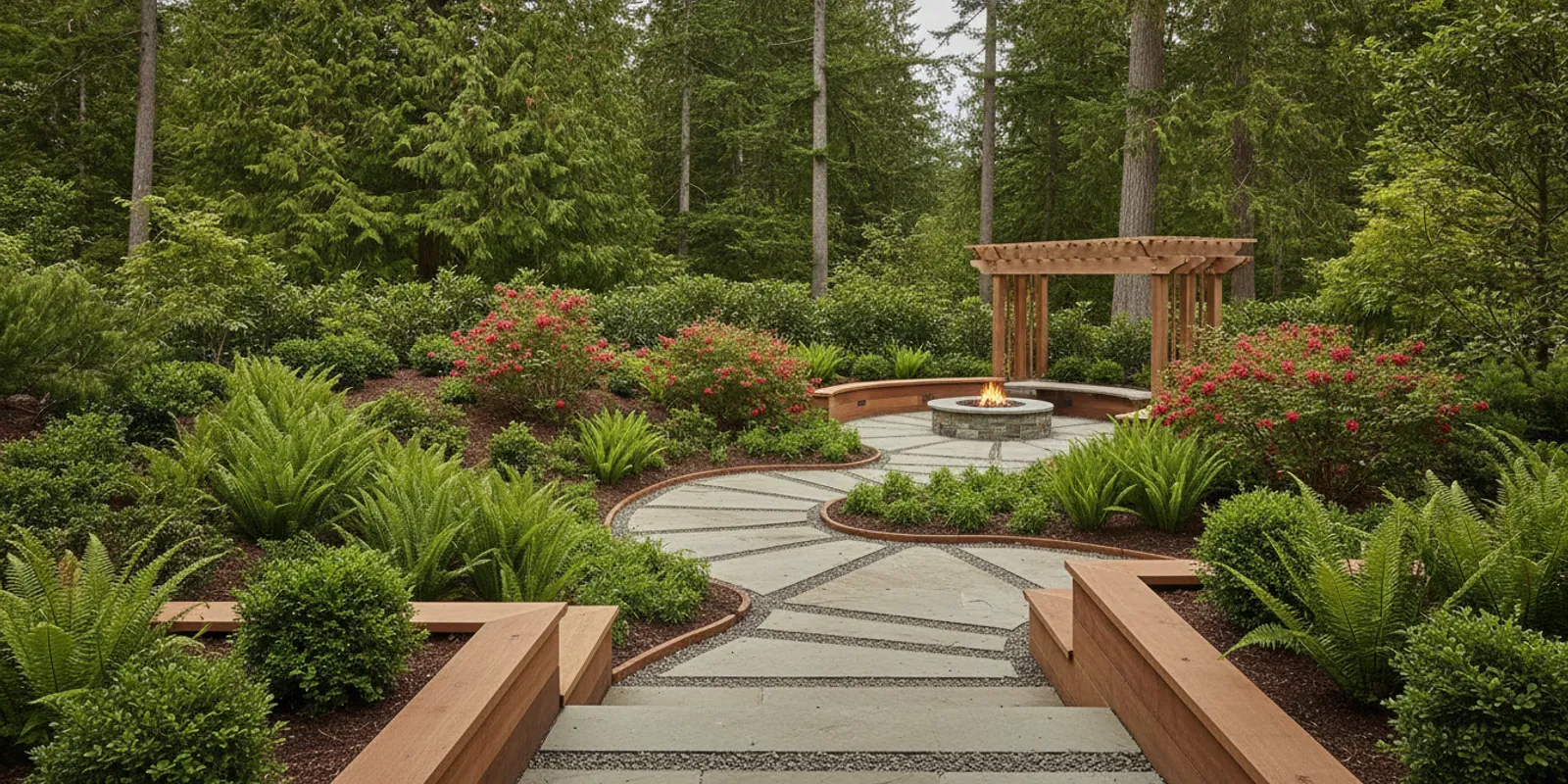
Native plant landscaping in the Pacific Northwest uses plants that evolved in the region, selected and arranged to fit a particular site’s light, soil, moisture, and use. The strongest garden is not simply a collection of native species: it is a considered planting plan that balances seasonal interest, habitat, outdoor circulation, and the homeowner’s goals. For a broader view of planning outdoor spaces beyond one region, see our guide to remote landscape design and sustainable outdoor living.
Call to discuss your landscape project
Why native plants outperform traditional landscaping in the PNW
“Outperform” depends on what a garden needs to do. A locally appropriate native plant can be a strong choice for a Puget Sound or Kitsap County landscape because it is part of the region’s ecological story and can suit local growing conditions. But no plant is automatically low-care, drought-proof, or right for every yard just because it is native. A shade-loving woodland species can struggle in hot reflected sun, while a plant adapted to open, dry ground may languish in a wet, shaded corner.
Compared with a planting plan built around familiar ornamental species from many regions, a thoughtful native palette can offer:
- A stronger sense of place. Native trees, shrubs, grasses, and flowers can make a garden feel connected to the surrounding Northwest landscape rather than assembled from unrelated specimens.
- Seasonal food and shelter. Local plant communities support relationships with regional wildlife. The value depends on which species are selected and how the garden is managed; a single plant does not create a complete habitat.
- Better site fit when chosen carefully. Match plants to the conditions they naturally tolerate, and they may need less intervention after establishment than an ill-suited choice.
- A layered design language. Ferns, evergreen shrubs, flowering plants, grasses, and trees create structure and texture that can complement stone, timber, and other built elements.
There are trade-offs. Some native plants spread, lose leaves, or look different through the seasons. A new planting also needs appropriate establishment care, including watering while roots grow into the site. “Native” is not the same as “no maintenance.” Learn the plant’s mature size and growth habit, then give it room and provide care suited to its needs.
Start with the place, not a shopping list. Record where the sun falls through the day, where water lingers after rain, which areas dry first in summer, and how people move through the yard. The USDA’s basic instructions for native plant landscaping projects likewise emphasize planning a planting to harmonize with adjacent areas and considering site and budget. For a detailed regional planning overview that is distinct from a plant-selection guide, see hardscaping considerations for Bainbridge Island.
The best native plants for Puget Sound and Kitsap County gardens
There is no universal “best” list. The right choices depend on whether the planting area is sunny or shaded, exposed or sheltered, moist or seasonally dry, and whether you want screening, flowers, groundcover, or a naturalistic edge. The plants below are examples to investigate, not a prescription for every property. Check local suitability, mature dimensions, and nursery availability before finalizing a plan.
For a shaded or woodland-feeling garden
- Sword fern can provide substantial evergreen foliage and a recognizable Northwest texture in suitable shade and moisture conditions.
- Salal is an evergreen shrub often considered for woodland-style planting. Allow for its eventual spread and avoid squeezing it into a narrow bed without a containment or spacing plan.
- Evergreen huckleberry can add structure and seasonal character where the site conditions fit. Confirm light and soil needs for the intended location.
- Oregon grape brings evergreen leaves and seasonal flowers. Its form and spiny foliage make placement important near paths and seating.
For flowers, pollinator interest, or an open sunny bed
- Red-flowering currant is a flowering shrub to consider for a sunny-to-partly-sunny location with enough room for its mature shape.
- Common yarrow can work in open areas where a lower, flowering plant is desired; choose a suitable local form and account for how it spreads.
- Tufted hairgrass offers fine texture and an upright grass form for appropriate sites.
- Camas can bring a distinctive seasonal flower to a planting designed around its growing cycle and site requirements.
- Oregon sunshine is one option to explore for sunny, well-suited areas, rather than a plant for a damp, deeply shaded bed.
For groundcover, screening, or a coastal character
Kinnikinnick may suit some open, well-drained areas as a low groundcover, while Nootka rose can form a larger, more informal shrub mass where there is room. Shore pine and vine maple may be considered as structural plants where their mature size and growing conditions make sense. Avoid planting a tree or vigorous shrub based only on its appearance at the nursery; plan for its full size, roots, shade, and relationship to buildings and views.
Regional plant guides can help turn examples into a site-specific shortlist. Oregon State University Extension’s native plant gardening collection offers plant lists, garden designs, and advice on creating pollinator habitat. For the Puget Sound area, King County’s Northwest Native Plant Guide includes illustrated plans for different yard conditions, such as sun, shade, and dry or moist areas. Use these as planning resources, then verify that a plant fits your exact site and design intent.
Combining native plants with hardscaping: design tips
Native planting and hardscaping work best when they are planned together. Paths, patios, steps, walls, and seating establish how people use the space. Planting softens edges, adds seasonal change, and helps each built area feel integrated into the garden. The goal is not to hide every hard surface under greenery; it is to give each material a purpose and a comfortable relationship to the plants around it.
- Map movement before placing beds. Mark the route from the house to the patio, gate, driveway, or garden destination. Keep the main walking line clear, and use planting to define its edges rather than narrowing it over time.
- Choose plants for the edge conditions. A sunny stone border may be warmer and drier than a bed beneath a tree. Select plants for the actual exposure and available soil volume, not for the conditions elsewhere in the yard.
- Give each plant its mature space. Set shrubs back from paths, steps, and walls according to their eventual spread. That reduces crowding and helps preserve access and sightlines.
- Repeat a restrained palette. Repeating a few compatible species can create rhythm between a path and a patio. Use variation in height, leaf shape, and flowering season for interest without making every small area feel unrelated.
- Coordinate construction and planting sequence. Establish where materials, equipment, and workers will enter before installing delicate planting. In a design-build plan, set finished elevations, path edges, and planting areas together so later work does not undo completed work.
A simple comparison can help organize an early concept. It is not a planting specification; actual selections require a site review.
| Garden condition or goal | Planting approach to explore | Hardscape relationship | Planning check |
|---|---|---|---|
| Shaded path or woodland edge | Layer ferns and suitable evergreen shrubs; use seasonal plants selectively | Let planting frame the route without brushing against the walking surface | Check mature spread, shade, and moisture |
| Sunny patio border | Use a limited mix of flowering plants and grasses suited to exposure | Keep seating and circulation clear; soften the edge with repeated forms | Account for reflected heat and summer drying |
| Sloped or terraced garden | Group plants by similar growing needs and intended height | Coordinate steps, retaining edges, and planting areas as one composition | Confirm site conditions and construction requirements before specifying plants |
| Low, open groundcover area | Consider spreading groundcovers only where their growth can be accommodated | Define a crisp edge against gravel, paving, or a path | Check spread, weed-management needs, and nearby planting |
Material choice should support the overall design rather than compete with it. Natural stone, timber, and other hardscape elements can create a quiet framework for planting, while a clear edge can keep a path legible as plants mature. For more on coordinating construction details and local project considerations, see our guide to choosing a hardscape contractor on Bainbridge Island. If you are developing a broader Seattle-area concept, our article on the landscape design process in Seattle explains how goals can become a build plan.
Native plant landscaping and water conservation in summer drought
Native planting can support a water-conscious garden, but choosing native species alone does not guarantee low water use. A newly planted garden still needs water to establish, and species from moist woodland conditions should not be treated like drought-adapted plants. Think in zones: put plants with similar moisture needs together, and avoid making the entire garden depend on one watering approach.
- Observe summer conditions. Note which beds dry out first, where roof runoff lands, and whether trees compete for moisture. A sunny slope and a sheltered north-facing corner will not behave alike.
- Match plant communities to those patterns. Select plants suited to the expected moisture and exposure. Do not place a plant that needs consistently moist conditions in the driest bed simply because it is native to the region.
- Plan for establishment. Water newly planted areas as needed for the plants and conditions while roots establish. The schedule will depend on weather, soil, plant size, and site exposure; avoid promising that a newly planted garden will need no supplemental care.
- Use mulch thoughtfully. A suitable mulch can help protect soil, but keep it compatible with the plants, finished edges, and desired appearance. Avoid piling material against plant stems or trunks.
- Reduce competition during establishment. Keep weeds from taking over young plants, and allow enough room for intended growth rather than planting too densely to achieve an instant finished look.
Water conservation is also a design question. Smaller planted areas, a clear distinction between paths and beds, and grouping by moisture need can make care easier to understand. Existing mature trees and site features should be considered before altering grades or planting beneath them. Where drainage is a concern, do not assume plant selection alone will solve it; the property may need a broader assessment of grading, soils, and water movement. This guide focuses on plant planning rather than substituting for that assessment.
How ShellScapes integrates native planting into sustainable design-build projects
A planting plan belongs in the larger design conversation. ShellScapes focuses on landscape design and construction, with outdoor spaces planned around how the site should look and function. Native planting can be considered alongside paths, patios, walls, steps, and outdoor living areas so the garden reads as one composition rather than a set of unrelated installations.
A useful design process begins by clarifying a few things:
- What should the space do? Identify how you want to move through the yard, where you want to gather, and which views or existing features matter most.
- What does the site allow? Record sun, shade, slope, soil conditions, wet spots, dry areas, and constraints around existing structures and trees.
- What kind of planting character do you prefer? Discuss whether you want a more structured garden, a naturalistic edge, evergreen screening, seasonal flowers, or a mix.
- How will the built work and planting meet? Resolve path widths, finished edges, steps, walls, and access before choosing exact plant locations.
- What level of care is realistic? Set expectations for establishment and ongoing attention. A low-intervention goal still needs a plant palette matched to the site.
For clients who are not near the local construction area, the online landscape design service is a separate way to explore sustainable outdoor living through design. For a local project, the design fee is included in the construction quote when ShellScapes handles installation. Each property and design is different, so the appropriate scope is determined around the project rather than a standard one-size-fits-all plan.
As the plan develops, plant choices can be adjusted to keep the composition practical and cohesive. A garden may use native plants as the main palette, or combine selected native species with other plants when the site, appearance, or homeowner’s goals call for it. The important thing is to make those choices deliberately and avoid treating “native” as a shortcut for fit, water needs, or maintenance.
Frequently Asked Questions
Are native plants always easier to maintain?
No. A suitable native plant can be a good fit for a site, but it still needs appropriate establishment care and enough room to mature. Maintenance also depends on the desired look, weed pressure, plant growth habits, and the site’s conditions.
Can I use native plants in a small garden?
Yes. A small garden can use a focused palette of species selected for mature size and the site’s light and moisture. Choose plants that will fit without constant pruning, and preserve clear access to doors, paths, and seating.
Do native plants eliminate summer watering?
No. New plants need establishment care, and plants suited to moist conditions may need more water than those adapted to drier sites. Group plants by similar needs and plan around the conditions in each part of the yard.
Should I use only native species?
Not necessarily. Native plants can be an important part of a regional design, but a successful plan should respond to site conditions, use, and the look you want. Select each plant for a reason, and avoid choosing a species solely because it is labeled native.
When should I plan plants in relation to hardscaping?
Plan them together, before construction details are finalized. Paths, walls, steps, planting areas, access, and finished grades influence one another. Coordinating them early helps protect new plants and keeps the completed space coherent.
Talk with ShellScapes about a design-build project
A well-planned native garden starts with the conditions you have and the outdoor life you want, then brings plants and built elements together in a way that can mature gracefully over time.