
Crushed oyster shell can look like a practical garden-bed barrier, but a rough surface is not the same as proven slug control. The short answer is that current evidence does not establish crushed oyster shell as a dependable way to stop slugs or snails.
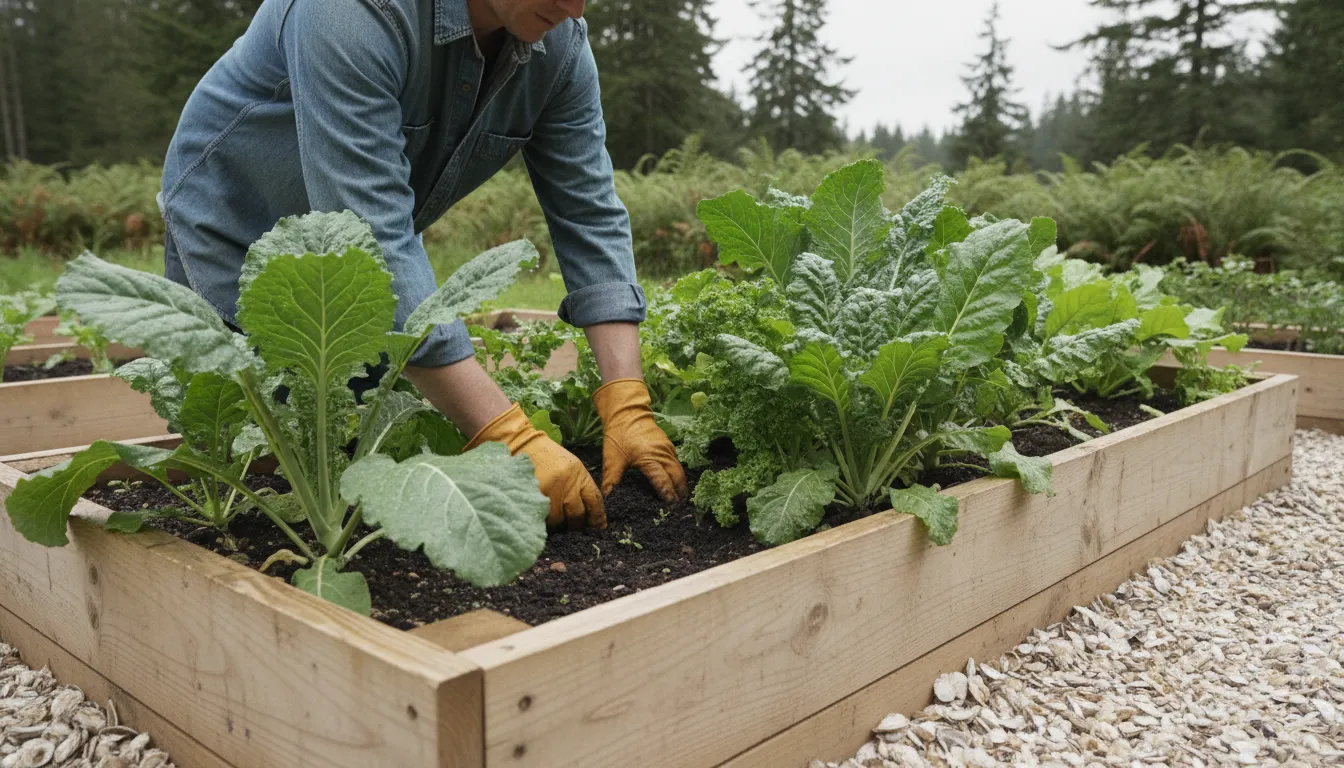
So, do oyster shells deter slugs? They may be marketed or observed as a deterrent. However, independent evidence is not strong enough to promise reliable protection. Results can vary with moisture, gaps, weather, and species.
That distinction matters for Pacific Northwest gardens, where cool, damp conditions can support slug activity. ShellScapes lists recycled crushed oyster shell for garden beds and landscaping, but its material information does not include a slug-control trial, application rate, or guarantee. The most useful approach is to examine what related barrier research actually shows, then treat oyster shell as a landscape material rather than a stand-alone pest treatment.
Do oyster shells deter slugs? The evidence is limited
The short answer is that crushed oyster shell may deter some slugs in some garden conditions, but the gathered evidence does not establish it as a dependable barrier. ShellScapes’ product information describes crushed oyster shell as a landscaping material with general pest-deterrence benefits. That is a product claim, not the result of a documented slug trial with stated methods, conditions, or success rate.
The independent evidence is also narrower than the question may suggest. A 2018 study evaluated diatomaceous earth, hydrated lime, sulfur, fumed silica, wood ash, and two essential-oil sprays against the Florida leatherleaf slug. Oyster shell was not one of the materials tested, so the results cannot be used to claim that oyster shell works or fails in the same way. The study did find that soil moisture significantly reduced barrier performance, and that applying the tested materials to foliage generally did not stop slug feeding. Those findings reinforce the need to be cautious about broad barrier claims, especially in damp beds.
A separate Royal Horticultural Society garden trial monitored 108 lettuces for six weeks. It tested several barriers, including crushed eggshells, arranged in complete circles around the plants. The protected lettuces showed no difference in damage from the unprotected lettuces. That result does not prove that every rough or granular material is ineffective, and the RHS notes that some barriers have worked in laboratory studies. It does show why a similar-looking shell material should not be treated as proven control without direct evidence.
Practical conditions can further change the outcome. Slugs and snails are often active at night in cool, damp settings, and they can use gaps, nearby vegetation, or sheltered areas to reach plants. A shell layer may shift, become covered, or leave openings as a bed is watered and maintained. Species also matter. UF/IFAS advises identifying slugs and snails before control because some species feed on fungi or decaying material rather than living plants.
It is also worth separating pest efficacy from soil compatibility. Oyster shell is alkaline, so gardeners should consider existing soil conditions and plant preferences before applying it near acid-loving plants. See the guide to oyster shells and soil pH for that separate question. Use the material for its documented landscaping role, monitor the garden, and avoid treating uncertain deterrence as a guarantee.
What the garden trials actually show
The evidence is easier to interpret when each source is kept in its lane. A garden trial can show what happened under its test conditions. A barrier-material study can reveal how moisture or application changes performance. A product page can state what a seller claims, but that statement is not the same as an independent efficacy test.
| Evidence type | What was tested | What it can prove |
|---|---|---|
| Controlled garden trial | The RHS monitored 108 lettuces for six weeks. Crushed eggshells were one of five materials placed in complete circles around lettuce bases. | The tested barriers, including eggshells, produced no difference in damage between protected and unprotected lettuces in that trial. It does not prove that oyster shells were tested or that every barrier fails. Read the RHS trial details. |
| Barrier-material study | A 2018 study evaluated diatomaceous earth, hydrated lime, sulfur, fumed silica, wood ash, and two sprays against the Florida leatherleaf slug. Oyster shell was not included. | Some tested materials performed differently, but soil moisture significantly reduced barrier performance, and applying materials to foliage generally did not stop feeding. It cannot establish oyster-shell effectiveness. Review the barrier-material study. |
| Product claim | A garden product listing says crushed oyster shells deter slugs and snails. | It documents a marketing claim, not a controlled comparison, test method, or verified result. It is not enough to establish dependable control. See the product claim. |
That distinction matters when asking whether oyster shells deter slugs. The RHS result is relevant context, but it tested crushed eggshells, not oyster shells, and the barrier study examined different materials and a different slug species. Neither should be presented as proof for or against oyster shell specifically. The responsible conclusion is narrower: the sources reviewed here do not establish crushed oyster shell as a dependable slug barrier. Conditions such as moisture, gaps, species, and placement may change what happens in a particular bed, so practical use should be monitored rather than treated as a guarantee.
Why a shell barrier may work in one bed and fail in another
Results can vary from bed to bed because the conditions around the material may matter as much as the material itself. A shaded bed with damp soil, dense ground cover, and nearby hiding places creates a different slug environment from a sunny, open bed that dries quickly. That difference does not prove that crushed oyster shell becomes more or less effective in a particular setting. It does mean that a simple observation should be interpreted alongside the garden conditions.
Moisture is especially important. Slugs are generally active at night when conditions are cool and damp, and they may also move during the day in cool, shaded areas. Their slime helps protect their soft bodies from drying. The University of Minnesota Extension notes that excessive shade and poorly drained soil can increase slug numbers, while warm, dry conditions are less favorable to them. Learn more about slug behavior from University of Minnesota Extension.
Weather can therefore change what you see from one week to the next. Rain, irrigation, and cloudy conditions may increase nighttime activity. A bed that appears unaffected during a dry spell may show fresh feeding after several damp nights. Gaps also matter in any proposed barrier. An incomplete edge, disturbed section, plant stem touching another surface, or layer shifted by foot traffic can create a route around the material. These are practical explanations for a changed result, not tested oyster-shell mechanisms.
Start by confirming that slugs or snails are responsible. Inspect the bed after dark or early in the morning, especially beneath leaves, pots, mulch, and other sheltered surfaces. Look for irregular holes and shiny slime trails. UC IPM recommends nighttime or early-morning inspection because these pests often hide during the day. And it identifies slime trails as a useful clue when other pests could cause similar damage. See UC IPM’s identification guidance.
Finally, species and feeding habits differ. UF/IFAS notes that some snails and slugs feed on fungi or decaying matter, while others damage living plants, and recommends identification before control efforts. Monitor the actual damage, moisture, weather, gaps, and pest identity together. That approach is more reliable than treating one bed’s apparent result as a guarantee for every landscape.
How to use crushed oyster shell responsibly in a garden
A careful approach starts by treating crushed shell as a landscape material, not a guaranteed pest-control treatment. Use this process to make a better decision for your garden:
- Identify the pest and the damage. Holes in leaves can have several causes. Look for shiny slime trails, which can help distinguish slug or snail feeding from other damage. Also identify the animal when possible. Some snail and slug species feed on fungi or decaying matter, while others may be beneficial predators. UF/IFAS recommends identification before control methods so helpful species are not harmed: UF/IFAS guidance on snails and slugs.
- Inspect when the garden is active. Check plants, bed edges, stones, pots, and other hiding places at night or in the early morning. Slugs commonly emerge in cool, damp conditions, and daytime inspection can miss them. Record where you find feeding or shelter before changing the bed.
- Check soil and plant compatibility. Oyster shell is alkaline, so consider existing soil conditions and the plants growing nearby. Avoid assuming it is appropriate around acid-loving plants, particularly where the soil is already alkaline. For that separate question, see our guide to oyster shells and soil pH.
- Use shell for its landscaping role. Crushed shell can be selected for garden beds and landscaping, including its recycled-material story and visual character. However, neither the available product information nor the gathered independent research establishes a dependable slug barrier. Do not apply it as a pest-control dosage or expect a guaranteed result. See examples of crushed oyster shell landscaping separately from pest-management claims.
- Monitor and combine methods. Recheck damage and pest activity after installation, especially following wet weather. Integrated guidance recommends combining measures such as reducing moisture and hiding places, handpicking, trapping, and exclusion. Morning watering or drip irrigation can reduce moisture around habitat. Adjust the plan based on what you observe rather than relying on one material alone.
What works better than relying on one barrier?
A garden usually gets better results from several small changes than from asking one border material to stop every slug or snail. UC IPM recommends an integrated approach that combines moisture management, removal of hiding places, trapping, exclusion, and handpicking. That matters because baits or barriers can underperform when shelter, food, and damp conditions remain available.
Start with the conditions that attract them
Inspect the bed at night or early in the morning, when slugs and snails are easier to find. Shiny slime trails can help distinguish their feeding from damage caused by other pests. Then remove or relocate cool, shaded shelters such as weeds, boards, stones, and unused pots. Excess shade and poorly drained soil can keep the area wet, so improve drainage where practical and avoid creating dense, constantly damp pockets around plants.
Watering timing can help, too. Use drip irrigation when it fits the bed, or run sprinklers in the morning rather than later in the day. This does not eliminate slugs, but it can reduce the overnight moisture they use. UC IPM’s slug and snail guidance recommends this type of moisture reduction as part of broader management.
Use monitoring, traps, and exclusion together
- Handpick: Check plants and nearby fence ledges, deck undersides, or other protected structures at night. Removing pests consistently can lower pressure in a small garden.
- Trap: Place a board slightly above the soil so mollusks can shelter underneath, then check and clear it daily. Ground-level beer traps are another option, but they also need daily checking.
- Exclude: Keep vulnerable beds tidy and close obvious routes through gaps where practical. A barrier is only as useful as its continuity, so inspect edges after rain, cultivation, or foot traffic.
Where copper fits
Copper is a useful comparison, but it is not a reason to promise that every barrier will work. UC IPM describes a copper band 4 to 6 inches wide, buried about 1 inch below the soil or attached around the edge of a raised bed. Treat that as sourced installation guidance for a copper barrier, not as proof that oyster shell performs the same way. Research on other barrier materials also shows why conditions matter: moisture can reduce performance. And a material that looks continuous when installed may develop gaps or become covered by soil and plant debris.
Oyster shell can still serve a legitimate landscaping purpose, but use it as a material choice within a monitored garden plan, not as a stand-alone slug-control guarantee. If damage continues, adjust the habitat, timing, traps, and exclusion measures rather than simply adding more shell.
Oyster shell, soil pH, and landscape fit
Crushed oyster shell can be a useful landscape material without being treated as a guaranteed slug-control product. ShellScapes supplies recycled shell aggregate sourced through partnerships with regional oyster growers, and lists it for garden beds, flower beds, and broader outdoor projects. That role matters: the material can contribute texture, drainage, and a defined surface in a designed space. Those qualities do not establish that it will stop slugs or snails from reaching plants.
Keep soil chemistry separate from pest-deterrence claims. Oyster shell is alkaline, so adding it can be a poor fit around acid-loving plants, particularly where the existing soil is already alkaline. Before using shell near sensitive plantings, test the soil or consult a qualified local garden professional about the plants and conditions involved. ShellScapes’ guide to oyster shells and soil pH covers that distinct question in more detail. It should not be read as evidence that changing pH is a reliable way to manage slugs.
Use the material according to the needs of the landscape, not a supposed pest-control dose. ShellScapes estimates that one cubic yard covers about 100 square feet at a depth of 2 to 3 inches and weighs approximately 1,500 pounds. Those figures help with material planning and access, but they do not prescribe how much shell would deter a pest. Coverage can also vary with grading, settling, edging, and the finish you want.
For examples of how the material fits into beds and outdoor spaces, see ShellScapes’ crushed oyster shell landscaping information. If slugs are damaging plants, pair any landscape-material decision with observation and practical habitat management. A shell surface may suit the project aesthetically and functionally, while slug pressure still requires its own measured response.
Frequently Asked Questions
Is crushed oyster shell a guaranteed slug barrier?
No. The available evidence does not establish crushed oyster shell as a dependable slug or snail barrier. ShellScapes lists recycled crushed oyster shell for garden beds and landscaping, but its product information does not include a barrier trial, application rate for pest control, or guarantee. Treat it as a landscape material first, not a proven pest-control treatment.
Do crushed eggshells stop slugs?
Not reliably. In a Royal Horticultural Society trial, crushed eggshells were one of five barriers tested around lettuces. The study monitored 108 plants for six weeks and found no difference in damage between protected and unprotected lettuces. That result does not prove every barrier fails in every setting, but it does caution against assuming a sharp, dry ring will solve a slug problem. Read the RHS trial summary.
Does moisture affect slug barriers?
Yes, moisture and shelter can change the pest pressure around a bed. Slugs are generally most active at night in cool, damp conditions, and wet conditions can increase their numbers. A separate barrier study tested materials other than oyster shell and found that moisture reduced barrier performance. So its results should not be treated as direct evidence about oyster shell. UC IPM recommends reducing moisture and hiding places.
What should I do first if slugs are damaging plants?
Confirm the pest before changing materials. Inspect plants at night or early morning and look for shiny slime trails, then reduce nearby hiding places and excess moisture. UC IPM recommends combining habitat management with handpicking, trapping, and exclusion rather than relying on one barrier. Morning watering or drip irrigation can also reduce moisture around the plants.
Contact us about your landscape project
If you are considering crushed oyster shell for a garden bed, ShellScapes can help you think through material fit alongside the broader landscape design and construction plan. That conversation can keep the material choice grounded in how you want the space to function, without treating oyster shell as a guaranteed slug or snail control. Contact us to discuss crushed oyster shell or a sustainable landscape project.